The Every Day Genius of Amy Ayres

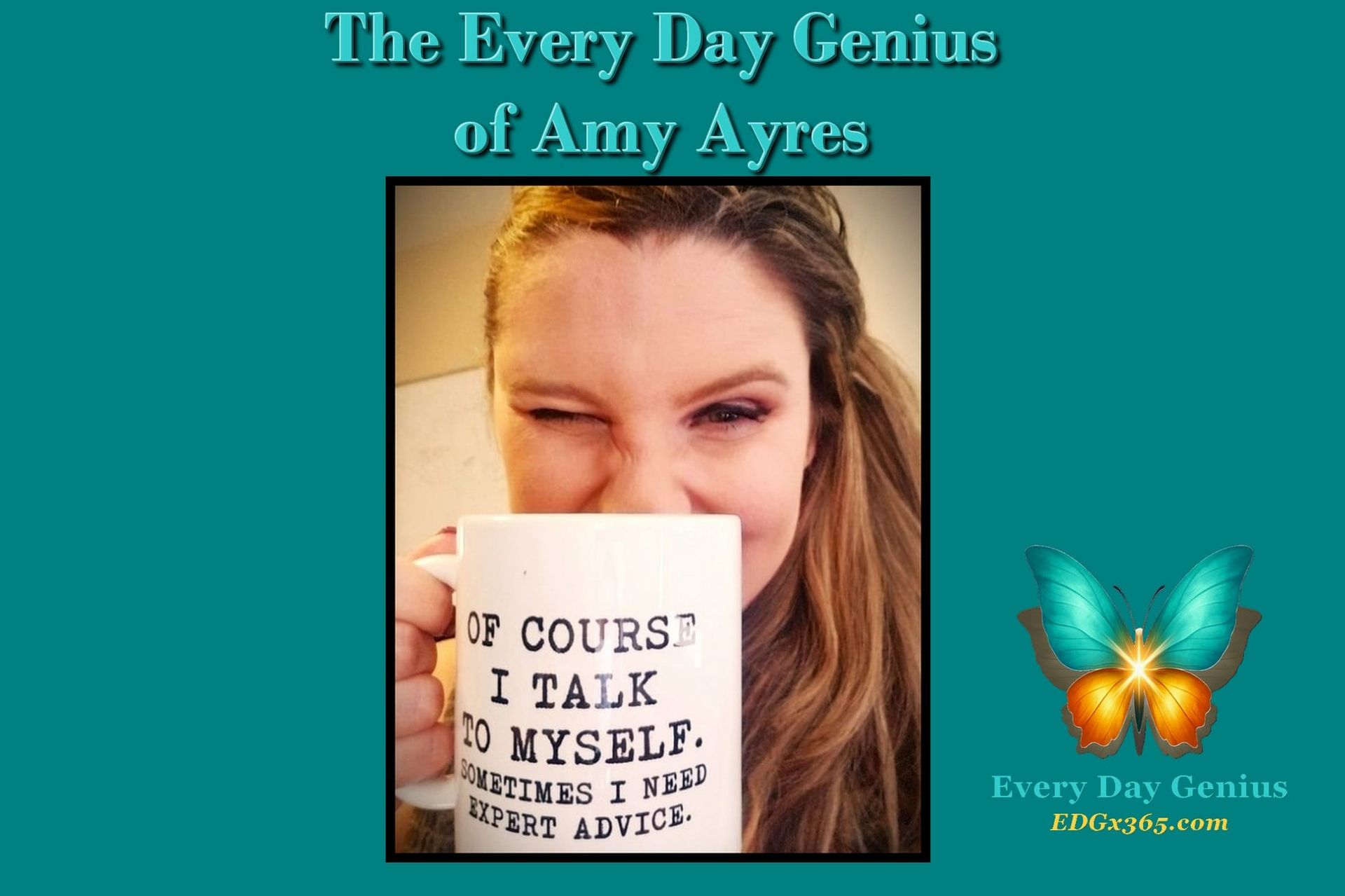
Watch for the Flight of Two Wings: Where Amy Ayres says she gets to be "Someone who finally gets to live with both comfort and possibility." Is it merely aspirational or is it the hidden power of her Genius?
Featured Genius: Amy Ayres
Meet Amy
Amy and I connected via an online summit featuring my recent podcast guest Angie Dixon of Profound Creativity.
In a post-summit powwow, we found some wonderful synchronicities in the divergent ways we approach life.
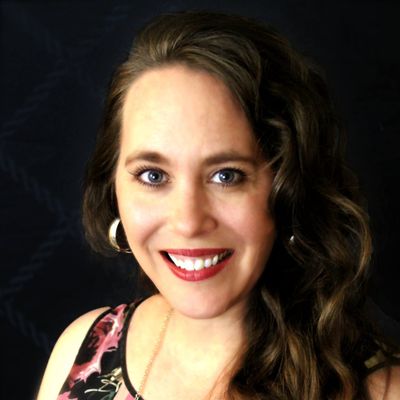
Amy Marie Ayres is an award‑winning indie author, mom, and neurospicy authorpreneur coach. She is the Gold Winner of the Literary Titan Award for her dystopian novel Star Lost and the creator of the Luccee Winterscott Series as well as an urban portal fantasy the Marilyn Deallan series, with Book 3 — Elsewhere — newly released.
Amy is also the founder of Offbeat INK Neurospicy Coaching, where she helps neurodivergent and unconventional creatives build fulfilling lives that actually fit their brains. Her mission is to use authenticity and humor to empower creatives to claim their unique voice, break stuffy rules, and live boldly on their own terms.
Please allow me to introduce the amazing Amy Ayres! (Want to connect with her? Links follow the interview.)
🩵 Michele Jennae
The Interview
1. What is your "work" in the world currently?
Michele Jennae: Thank you Amy for joining me today, Let’s dive right in. What is your dream in the world? Please elaborate.
Amy Ayres: Right now, my work in the world is through speaking at summits, private coaching, and building neurodivergent communities. Ultimately, I know people are lost right now in this mess and I want to reach them. My efforts are rooted in telling the truth about lived experience in a way that actually feels authentically me. But as a coach, I’m not here to hand out generic inspiration or reheated self‑help slogans. I hate platitudes and cliches, so, I’m here to shoot straight. I want to take the real, complicated, often messy parts of my life and turn them into something useful for someone else. I’ve spent years navigating my own identity wounds, family dynamics, and the kind of subtle emotional weather that shapes a person long before they understand what’s happening to them. Now I use all of that to help people recognize the patterns they’ve inherited, the stories about themselves they’ve internalized, and the creative parts of themselves they’ve been taught to mute.
Michele Jennae: What does that look like?
Amy Ayres: My work isn’t about pretending I have everything figured out. It’s about creating spaces where people feel safe enough to be honest about where they are and brave enough to imagine where they could go. I’m interested in the moments we’re told to ignore and I want people to feel less alone in their experiences and more capable of rewriting the scripts of neurotypical life.If I have a coaching mission, it’s to make room for nuance, humor, and humanity in conversations with neurodivergent people that usually get flattened into clichés. I want to help them move toward the life they want, not by pretending the past didn’t happen, but by showing how it can become a source of clarity.. My work is simply this: telling the truth in a way that helps other people tell theirs.
2. What is your dream?
Michele Jennae: What is your dream? The one you'll regret if you don't pursue it. What does it mean to you to have it?
Amy Ayres: My dream is to take the way I tell stories and bring it into a public space where it can actually reach people. I want to speak on stages, write books, perform, teach, and create work for film that carries the humor, honesty, and perspective I’ve earned from my life. I’ve always felt this pull toward using my voice in a bigger way, not just privately or in small circles, but in places where it can land with people who might need it.
Michele Jennae: Can I just say I love the diversity of your dream! I love the way you ignored the unintentional focus on “one dream.”
Amy Ayres: I don’t want to choose one medium because the dream has never lived in a single form. I want the freedom to move between comedy, storytelling, teaching, writing, and performance, because each one lets me express something different. What matters to me is the connection that happens when someone hears something true and feels less alone because of it. If I never pursue this, I know I’ll carry that regret. I’ll always feel the weight of knowing I had something to say and stayed quiet because it felt too big or too unrealistic. If I ever get to live this dream, it would mean I finally trusted my own voice enough to let it take up space. It would mean I stopped treating my creative work like a side note and allowed it to become the center of my life, which is what I’ve wanted for a long time.
3. What do you wake up for?
Michele Jennae: I think that’s a universal feeling Amy. What do you wake up for? What thread runs through your days?
Amy Ayres: What gets me out of bed every morning is my daughter, in the most literal and immediate sense. She’s four, she has needs, she has opinions, and she has no interest in whether I slept well or feel inspired. But she’s the loveable anchor that pulls me into the day.
Underneath the parenting logistics, I adore her and want to spend every minute with her I can. But I’m always looking for signs that the world hasn’t completely given up on itself. I look for the people who are still trying, the ones who create art, who show up with sincerity, who haven’t let cynicism calcify their insides. I look for the ones who are still curious, still open, still willing to be moved towards a new “refreshed” way of being, even if it’s unapologetic.
Michele Jennae: You really have a way with words. I can feel your heart in this.
Amy Ayres: Thank you. That thread runs through everything I do. Even on the days when the world feels loud and ugly, I’m scanning for the moments that remind me there’s more to it than the noise. A piece of writing that hits with honesty, a stranger being unexpectedly kind, someone making something beautiful for no practical reason at all. Those moments keep me hopeful in a way that feels almost stubborn. They remind me that there are still people out there trying to live with intention, trying to be better, trying to create something meaningful. I wake up for my daughter, but I also wake up for the possibility that the day might show me something worth holding onto. I wake up for the artists and the soulful people who haven’t stopped showing up. I wake up because I want to be one of them.
4. What's the hardest thing you've ever done?
Michele Jennae: Amy, I have a strong feeling you ARE one of them! Now, what's the hardest thing you've ever done? Please tell me about it.
Amy Ayres: The hardest thing I’ve ever done was navigating the years before I became a mother. I had my daughter later in life, and not because I wanted to wait. It was a long stretch of uncertainty, grief, and feeling like my life was moving forward everywhere except the place I wanted it to. There’s a particular kind of pain that comes from wanting something so deeply and having no control over whether it will ever happen. It’s quiet, but it’s relentless. It sits with you in every doctor’s office, every birthday, every passing year, every moment when someone else’s life seems to be unfolding more easily than yours.
I had to live inside that uncertainty for a long time. I had to keep showing up for a life that didn’t look anything like the one I imagined. I had to make peace with the possibility that the thing I wanted most might never happen, and still find a way to stay open, hopeful, and connected to the world around me. That was the real work. Not the logistics or the medical side of it, but the emotional endurance it required. Patience. The vulnerability. The willingness to keep wanting something that kept breaking my heart.
When my daughter finally arrived, the difficulty didn’t magically disappear. Parenting is its own kind of hard, and I feel it every day. But the hardest part was surviving the years before her, when I had to hold onto a dream without any guarantee it would ever become real. That period reshaped me. It taught me how to live with uncertainty, how to grieve without shutting down, and how to keep moving even when the future felt like a question I couldn’t answer.
5. How did you succeed at that hard thing?
Michele Jennae: Yes, to keep moving into, maybe through, a question with no apparent answer… I have always said it’s important to “sit with” questions. Sometimes sitting with them is moving through them without answers. How did you succeed at that hard thing? What inner and outer resources did you access?
Amy Ayres: I got through that period the only way I could, which was by putting one foot in front of the other even when I didn’t feel capable of it. I didn’t have much support, and that was its own kind of heartbreak. It showed me very quickly who was actually in my corner and who only knew how to show up when things were easy. There were days when the uncertainty felt like it was eating me alive, when the waiting and the not‑knowing made me feel like I was losing my grip on myself. But I kept going because the alternative was to collapse into a version of myself I didn’t want to become.
What I discovered in that stretch of time was a kind of resilience I didn’t know I had. Not the glamorous kind people like to talk about, but the quiet, stubborn kind that keeps you moving when everything feels impossible. I learned how to sit with feelings that had no resolution. I learned how to keep my heart open even when it felt safer to shut it down. I learned how to take care of myself in small, practical ways when the big picture felt unbearable.
Michele Jennae: There is nothing small about doing that, even doing the small things. I get the sense you know how big that actually is.
Amy Ayres: Yeah, there wasn’t a single moment where I triumphed or figured it all out. It was more like a long, slow decision not to break, even when breaking felt like the most reasonable option. I had to become my own resource, my own comfort, my own reminder that life could still hold something good. And when my daughter finally arrived, I realized that surviving that period had changed me. And I'm still coming back to a version of me that knows how to ask for help and to truth others have my back.
6. What do you see as your top 3 strengths?
Michele Jennae: That’s a shift! Seeing your change, what do you see as your top 1-3 strengths now? Can you give a brief example when you most use each strength?
Amy Ayres: Resilient, Perceptive, and Expressive
Resilient: There is a steadiness in me that was shaped by years of uncertainty and longing. I learned how to keep moving through days that felt heavy and unanswerable, how to stay present when everything around me felt fragile. That period taught me how to hold myself together without shutting down, how to keep my heart open even when it felt easier to retreat. My resilience lives in the quiet choices I make to continue, to hope, to show up again.
Perceptive: I move through the world with a kind of inner listening. I think I notice the small emotional signals that most people overlook. I can feel the truth of a moment before the words catch up. This sensitivity guides me in conversations, in parenting, in the way I create. It helps me understand people from the inside out, and it allows me to connect in ways that feel grounded and real.
Expressive: I have a way of turning experience into language that carries weight. When something affects me, I can shape it into words that help others recognize themselves. I can take the tangled parts of being human and give them form, whether through humor, storytelling, or reflection. Expression is how I make sense of my life, and it’s how I offer something meaningful to the world around me.
7. Do you have a WHY?
Michele Jennae: Hearing you speak, reading your words, I know the truth of each of these strengths in you. Do you have a WHY? A burning mission to show up in the world and contribute? Tell me about your WHY and your HOW?
Amy Ayres: My “why” isn’t some dramatic lightning‑bolt revelation. It’s more like a slow, persistent tug that refuses to leave me alone. I’m here because I want to make sense of the world in a way that helps other people feel a little less confused, a little less alone, and maybe even a little entertained while they’re at it. I’m wired to notice things — the absurd, the tender, the painful, the hilarious — and I can’t help but turn them into stories or observations or moments that connect people.
My mission, if I have one, is to show up with honesty and humor in a world that often feels allergic to both. I want to talk about the things we’re all thinking but rarely say out loud. I want to take the weird, complicated parts of being human and make them feel normal instead of shameful. And if I can make someone laugh while I’m doing it, even better. Humor is my favorite coping mechanism and also my favorite teaching tool.
Michele Jennae: That phrase, “allergic to both,” resonates with me in a funny way. Whether or not the conspiracy theories about manufactured medical issues are true, this idea of being allergic to honesty and humor is like a smack upside the head. It’s a wake-up call to see how much our world has been manufactured against the grain of how we’re meant to live. More autonomy, more competence, more resilience – those feel real to me.
Amy Ayres: Exactly, I show up by being myself in the most consistent way I can manage. I write. I speak. I tell stories. I pay attention. I try to be the person who says the thing everyone else is tiptoeing around. I try to bring a little clarity, a little levity, and a little humanity into rooms that desperately need it. The “how” isn’t glamorous.
8. What does your best possible future self look like?
Michele Jennae: What does your best possible future self look like? Give an example of a future scenario.
Amy Ayres: My best possible future self lives in a home that feels calm in that rare, luxurious way where it’s comfortable and peaceful. In this future, my husband and I have people around us who genuinely care about our daughter. They’re steady, trustworthy, and actually make my life easier instead of more complicated. My days have a rhythm that makes sense.
There’s structure, but not the kind that makes me feel trapped. I know what needs to happen, but there’s still room for spontaneity, like deciding on a whim to take a day trip or saying yes to a creative opportunity that lights me up. Life feels organized enough to function and loose enough to breathe. And in this future, my art and my business aren’t squeezed into the leftover corners of my day. They’re thriving. I’m doing work that feels exciting and meaningful, the kind of work that makes me think, “Yes, this is exactly what I’m supposed to be doing.” People connect with it. They show up for it. They talk about it. It matters.
That’s the version of me I picture: someone living in a peaceful home, surrounded by good people, moving through her days with a rhythm that supports her, and doing creative work that feels alive. Someone who finally gets to live with both comfort and possibility.
Michele Jennae: Your vision sounds like “touching grass,” a phrase you mentioned to me on a phone call the other day. In a way, I think we all want to “touch grass” in our own unique ways.
Amy Ayres: Oh, it’s long overdue. In my humble opinion, the outside world hasn’t been very hospitable in the last decade, but I think I owe it to myself to be a force moving through it, regardless. If anything, I deserve the fresh air.
Michele Jennae: You're grounded and also flying freely. What a lovely image of living into your Genius.
9. What obstacles will you have to overcome?
Michele Jennae: What obstacles will you have to overcome in the pursuit of that future vision? What might present itself inside you and in the world to challenge you in pursuing your dreams?
Amy Ayres: Just the same stuff that’s been trying to trip me up for years. First, there’s my own brain, which loves to whisper things like “Are you sure you’re allowed to want that” and “Maybe we should overthink this until we’re dehydrated and sleepy.” That voice is frankly a little rude.
Michele Jennae: <laughing> The VOICE. Maybe there should be a reality show about that voice, alongside the singing show… Can you imagine? Where the Voice with a capital V gets a makeover?
Like What Not to Say (to yourself,) instead of What Not to Wear…
Amy Ayres: Hahaha! I actually think “What Not to Say” is great, a bit of a tangent, but I loved their reboot Wear Whatever the F You Want. So ours is like Just Do Whatever the F You Want Stop Internalizing Other People’s Insecurities As Your Own (But that title is too long lol)
I don’t think my own voice is as rude as the world’s, which has a habit of throwing curveballs at the exact moment I start to feel organized. I’m fully expecting unexpected childcare crises, surprise expenses, and the occasional person who claims to be supportive but mysteriously vanishes the moment I need actual help. Life loves to test my patience, my scheduling skills, and my ability to not scream into a pillow.
I also know I’ll have to push past the part of me that wants everything to be perfect before I start. That part is very committed to the idea that I need a spotless house, a flawless plan, and a personality transplant before I can pursue my dreams. Meanwhile, the rest of me knows I just need a little courage and maybe a snack.
And of course, there’s the challenge of building a creative life while raising a small human who believes socks are optional. Balancing ambition with motherhood is basically a circus act, except the circus performers get applause and I get applesauce on my shirt.
But here’s the thing: none of these obstacles are dealbreakers. They’re just the usual cast of characters in my life. I’ve handled worse. I’ve survived uncertainty, exhaustion, and the kind of emotional endurance tests that should come with a medal. So yes, challenges will show up, both inside me and out in the world.
10. What one AMA question would you like to answer?
Michele Jennae: Thank you, Amy. Now, if you were hosting an AMA (Ask Me Anything Session), what is the one question you'd hope someone would ask, and what is your answer?
Amy Ayres: The one question would be, “What’s something you wish more people understood about you?”
And my answer would go something like this: I wish people knew that beneath the sarcasm, the humor, and the general air of “I’ve got this,” there’s someone who’s actually trying really hard to build a good life for herself and her daughter. I’m not winging it as much as it looks like I am. I’m paying attention. I’m trying to grow.
I’m trying to create something meaningful out of the chaos. And yes, I’m also trying to remember where I put my keys, which is its own spiritual journey. I wish people understood that I’m not complicated in the dramatic sense. I’m complicated in the “I think deeply about everything and also laugh at my own jokes” sense. I care a lot. I notice a lot. I feel a lot.
And I’m trying to turn all of that into something useful instead of letting it sit in my brain like an overstuffed closet.
Michele Jennae: That’s a very human response Amy. Thank you for sharing your Every Day Genius today!
Connect with Amy
I hope you've enjoyed getting to know Amy better. I know I have.
💡For more Amy Ayres check out her website: AmyMarieAyres.com
Substack: https://amymarieayres.substack.com
💡Watch for Amy's guest appearance with Michele Jennae in episodes of Every Day Genius: The Podcast. (Pub date TBA - likely in May)
No affiliate links are included in this post.
Subscribe to my newsletter
Most inboxes drain you. This one is designed to do the opposite. Join the weekly Every Day Genius dispatch.







Member discussion